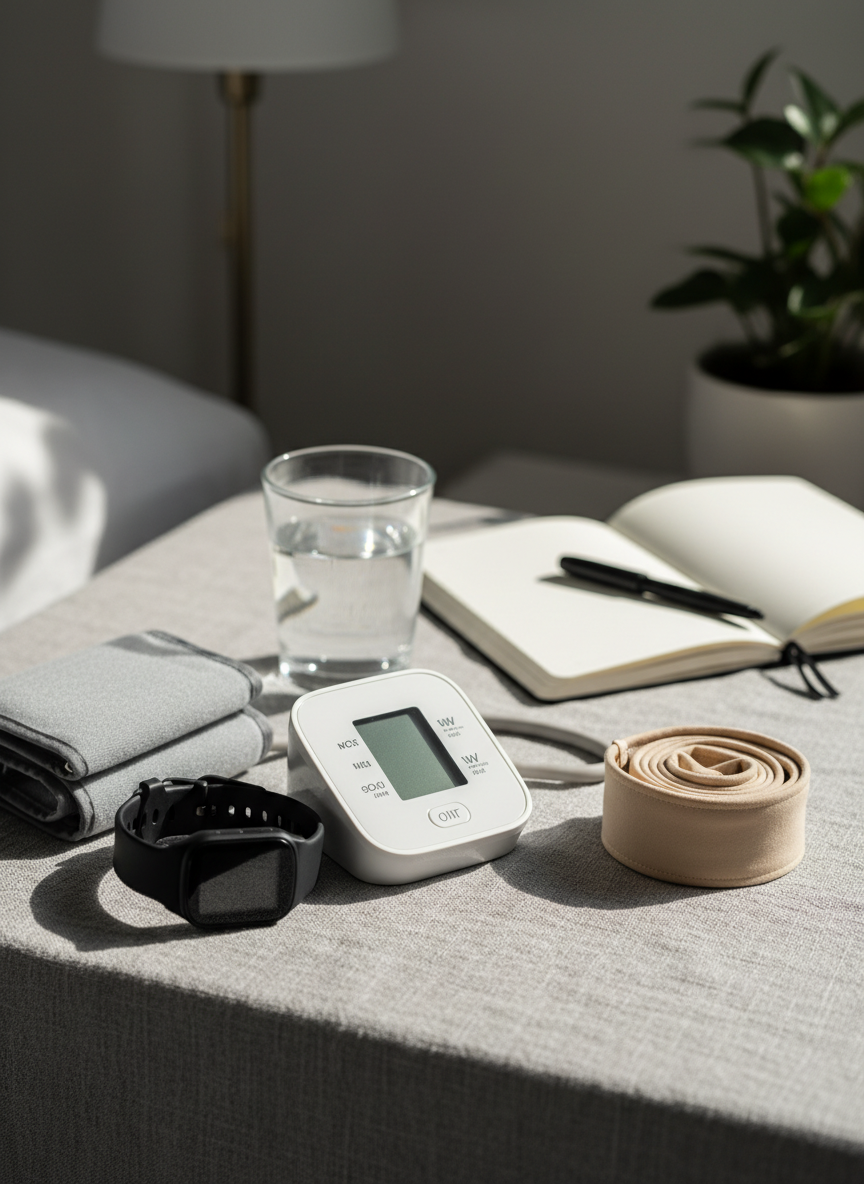
A close-up, photographic view of a tidy bedside setup featuring a digital blood pressure monitor, a sleek heart rate monitor watch, and a neatly coiled lightweight compression garment folded on a soft gray fabric surface. Behind them, a clear glass of water and a small notebook with an uncapped pen suggest tracking symptoms and coping strategies, with no visible text. Soft, diffused afternoon light from a nearby window casts gentle shadows and highlights the textures of fabric, plastic, and metal. Shot from a slightly elevated angle with moderate depth of field, the background falls into a subtle blur. The atmosphere is calm, organized, and practical, emphasizing everyday tools for living with dysautonomia in a non-sensational, respectful way.

About Me

A scientist-at-heart patient unpacking dysautonomia through research, lived experience, and practical coping tools.

About

About Me and My Dysautonomia

I’m a patient, researcher-by-necessity, and writer living with dysautonomia. Here I share how decades of symptoms, a late diagnosis, and a science-nerd brain shaped The Dysautomaton—part evidence digest, part personal diary, and entirely non‑medical advice.

A photographic, eye-level view of a soft, neutral-toned living room corner designed for recovery and pacing with dysautonomia. A plush armchair draped with a light, breathable throw faces a low wooden side table that holds a large insulated water bottle, a small tray of electrolyte packets, and a simple timer device. In the background, a neatly rolled yoga mat and a compact, folded step stool rest against the wall, suggesting gentle movement and activity modification. Warm late-afternoon light filters through sheer curtains, casting soft, elongated shadows and a comforting golden hue. The composition is balanced and uncluttered, with a serene, empowering mood that emphasizes sustainable coping strategies without any dramatic or distressing medical imagery.